Futures of museum storytelling to 2040, and an innovation strategy for the Royal Ontario Museum
Initial research question
How can museums evolve their storytelling approaches to remain relevant in a digital and increasingly remote world?
The pandemic made the question urgent: UNESCO and ICOM estimated that 90% of museums closed temporarily, and one in eight faced permanent closure or a rethink of how they operate. We chose the Royal Ontario Museum, Canada’s largest, as our case, and began by articulating its current strategy from public sources: the choices it had made, where it competed, and where the pressure was building.
Reframed research question
How can a museum remain a trusted storyteller when what matters most is who tells the story, how, and who gets access to it?
The initial question invites a technology answer: more digital, more access, more screens. Our horizon scanning kept pointing somewhere else. The variable that mattered was trust. A museum can digitize everything and still lose relevance if people stop believing the institution that tells them what the objects mean.
So we built our scenarios on two axes, trust in public institutions and the pace of digital transformation, and recast the ROM’s role from custodian of heritage to partner, catalyst and presence.
How we worked
We started with a STEEPV horizon scan of 13 trends, each extrapolated 10 and 20 years out with its counter-trends and its implications for museums, and mapped the drivers underneath them. From there we built four scenarios for 2040, each with a backcast timeline, an analysis of who benefits and who is left out, and a narrative glimpse of a single day in that future. We compared them, mapped the interest-holders, and chose Memory Gardens, a participatory future with ethical AI at its centre, as our preferred one. Next, we set out the pathways toward it and the signals that would tell us we were drifting away.
Then we made one of the futures physical.
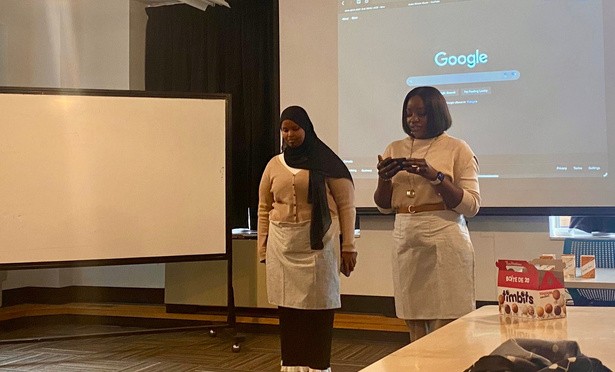
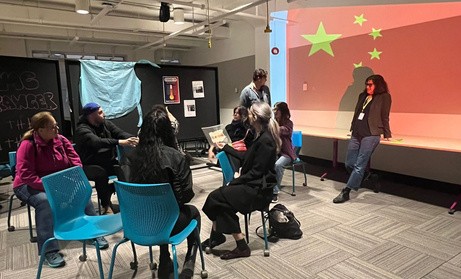
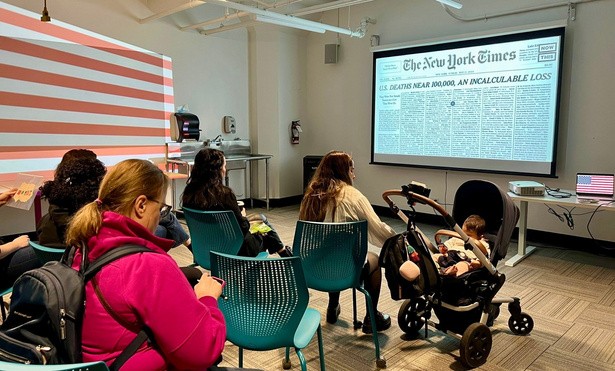
Stranger Cafe
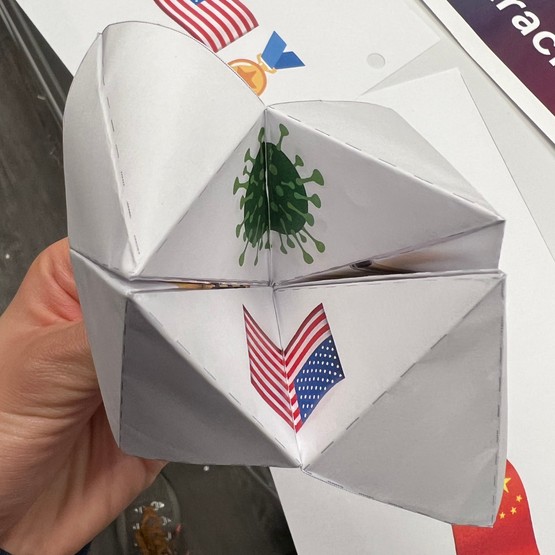
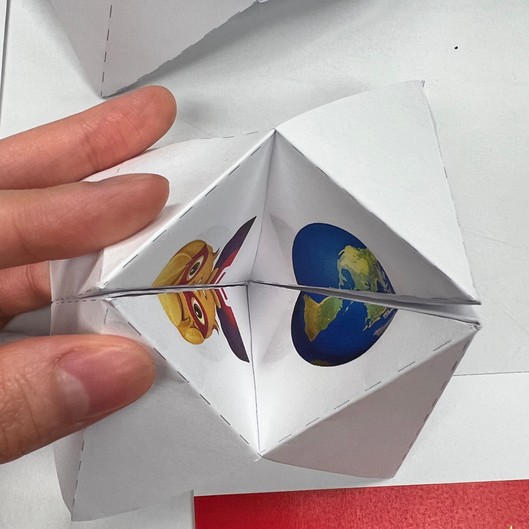
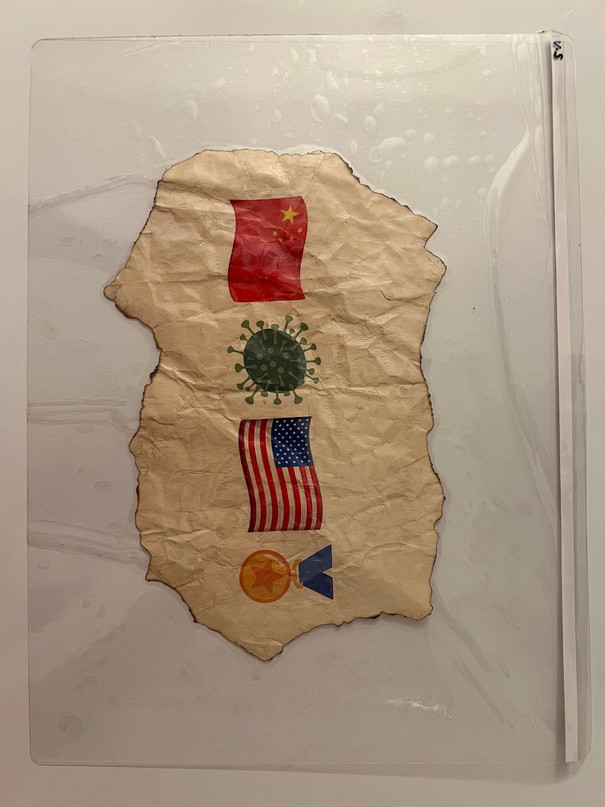
Guests who gave the passphrase (“Would you like a fortune cookie?”) were led downstairs into The Truth About COVID-19. Two groups each received one of the competing national accounts of the pandemic, and decoded clues hidden in a message and a paper kaleidoscope. Then they swapped “truths” and talked about how the same event becomes two stories depending on who tells it. It was our argument about narrative control, experienced rather than presented.
The strategy
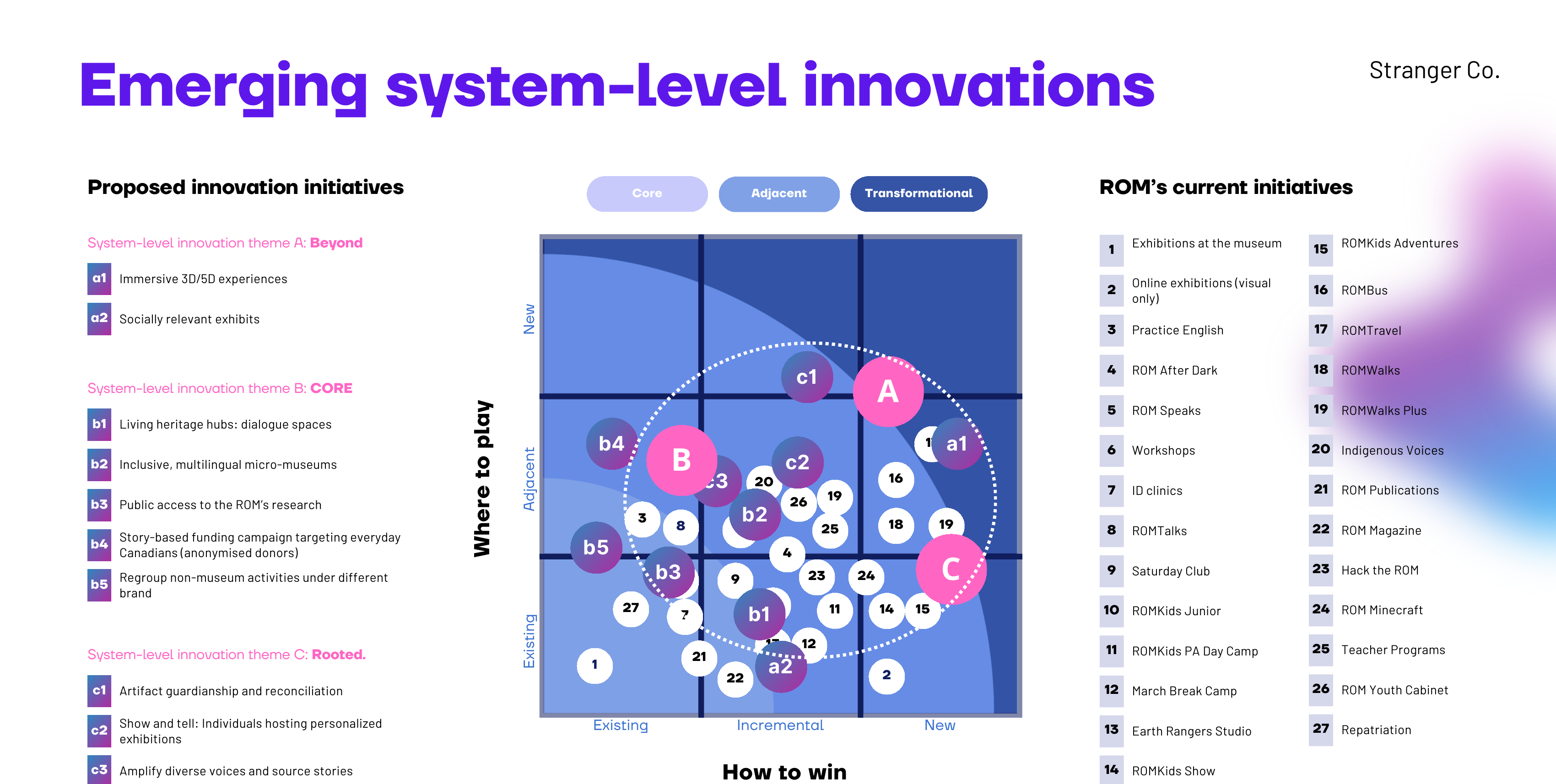
The second half turned the foresight into a ten-year innovation strategy. Using Playing to Win and Doblin’s Ten Types of Innovation, we generated and scored 15 ideas, plotted them against the ROM’s existing activities on an ambition matrix, sized the opportunities and named the capability gaps. Three system-level initiatives came out of it:
- CORE by the ROM: community micro-museums and dialogue hubs
- Rooted.: an Indigenous artifact-guardianship model with shared exhibition revenue
- Beyond: immersive, multi-sensory exhibitions
Dania Idam, Aliya Ahmed-Mohamoud, and Carol Cheung.
OCAD University, MDes in Strategic Foresight and Innovation, Fall 2024.

