Professional recognition for social innovation, with Social Innovation Canada
Initial research question
How could a certification process give social innovators a structured, credible pathway for recognizing their expertise?
SI Canada is a registered charity that serves as a resource to Canada’s social innovation ecosystem, providing training, tools and shared services, leading national collaborations, and working to reduce the barriers to systemic change. It came to us curious about certification: a way to elevate the field, bring consistency to practice, and connect to wider professional development. Underneath sat three pressures: a field with no agreed definition, limited funding, and the need for alternative revenue.
Reframed research question
How might a pluralistic, practice-driven, and co-created professional designation or certification recognize diverse expertise, support community-building, and foster systems-level transformation — while remaining adaptive, accessible, equitable, and regenerative?
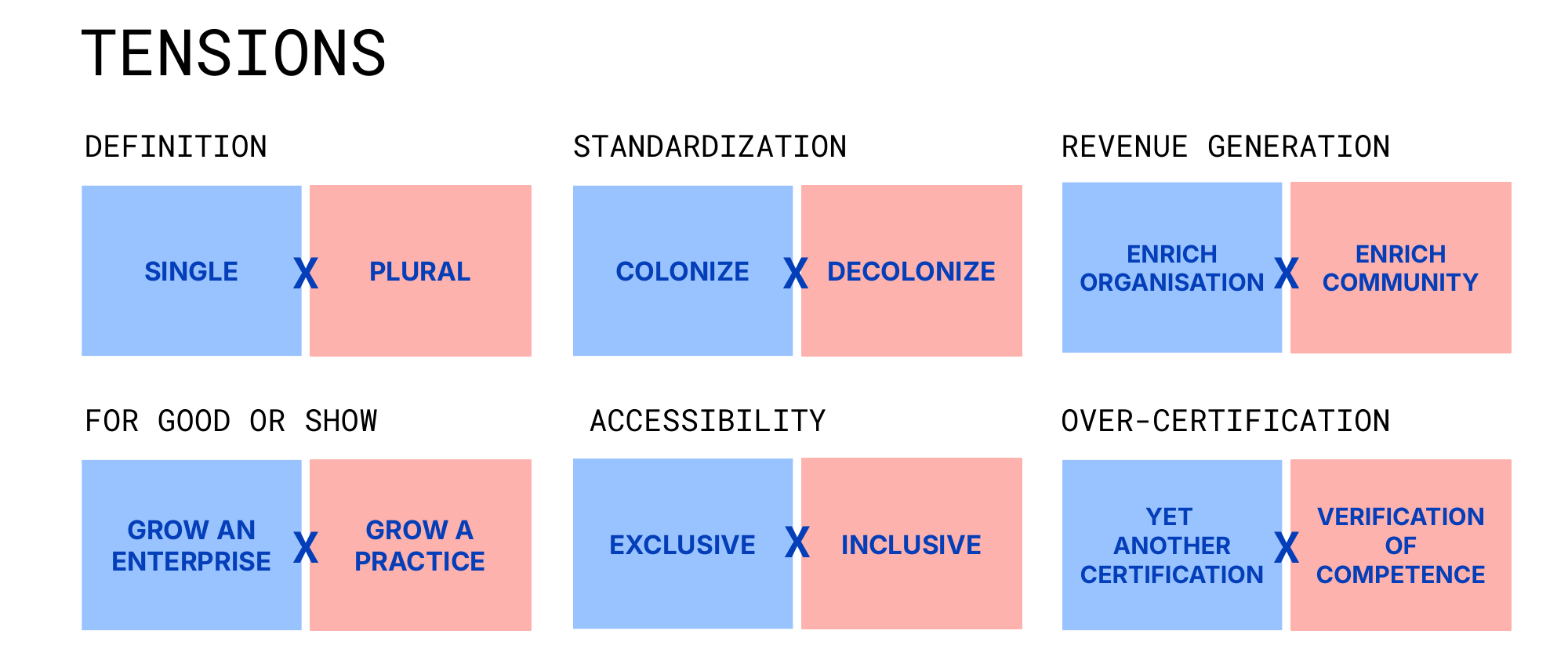
The more we listened, the less a single certification looked like the answer. Our interviews and workshops kept surfacing tensions any credential would have to hold: a single definition of social innovation or a plural one; growing an enterprise or growing a practice; exclusive or inclusive; “yet another certification” or a genuine verification of competence. Standardizing the field risked colonizing it. And some of the people a designation most needed to reach don’t call their work social innovation at all; they call it social justice, or community work, or nothing.
So the question became how to recognize expertise without narrowing it.
How we worked
We mapped SI Canada’s system and sector, ran a horizon and environmental scan across STEEPV+C, analyzed the competitive landscape, and defined potential customer segments. We held conversations and workshops with SI Canada and three semi-structured interviews with subject-matter experts. On the business side, we mapped the organization’s current model with the Flourishing Business Canvas and diagnosed its structure using the Viable System Model.
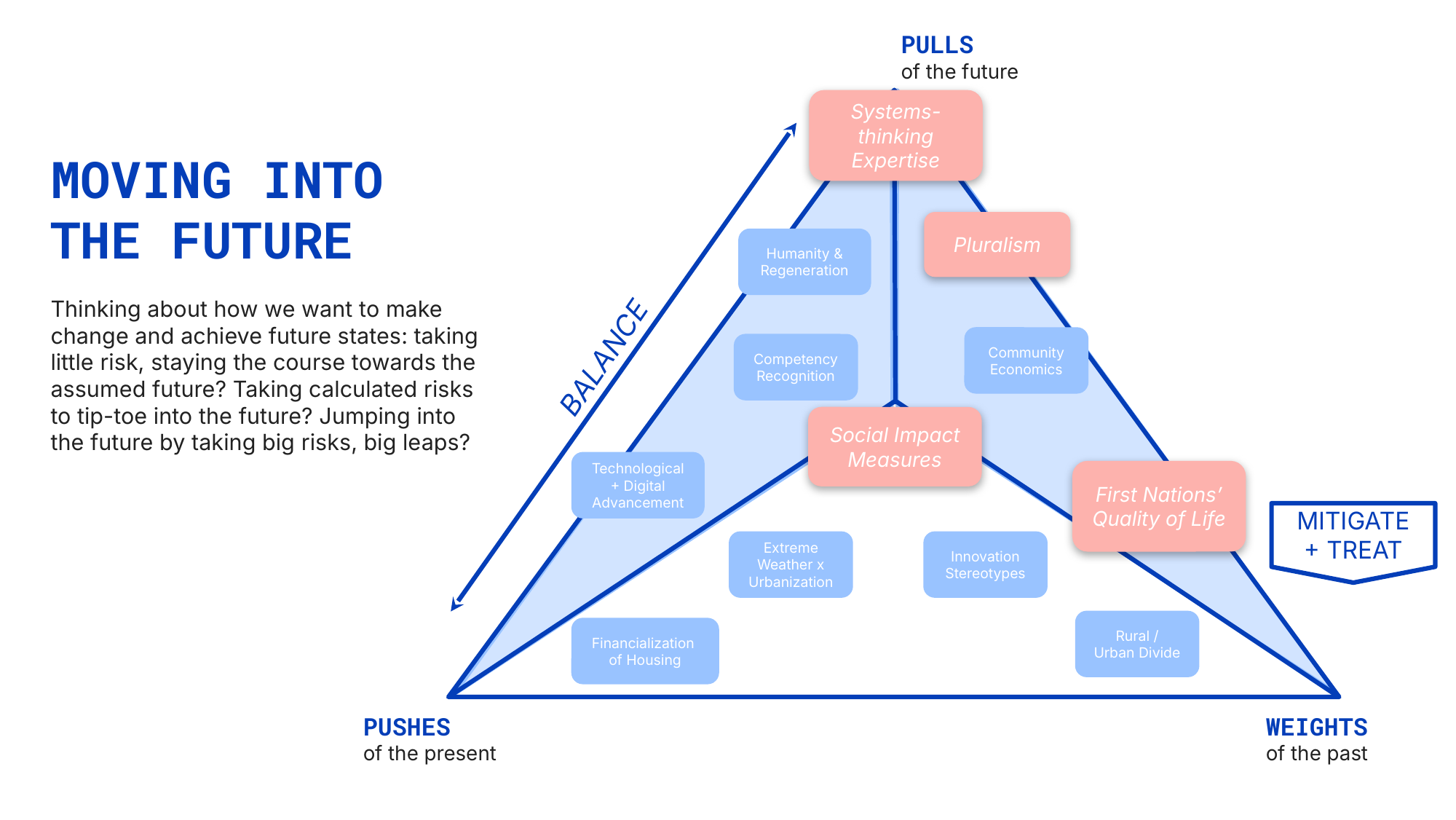
To look ahead, we used the futures triangle (the pulls of the future, the pushes of the present, the weights of the past) and set an assumed, a brighter and a desired future for social innovation in 2040.
What came out of it
Seven design principles shaped the solution, among them assessing competence through practice rather than credentials, honouring plurality and context, and treating the framework itself as something that keeps evolving.
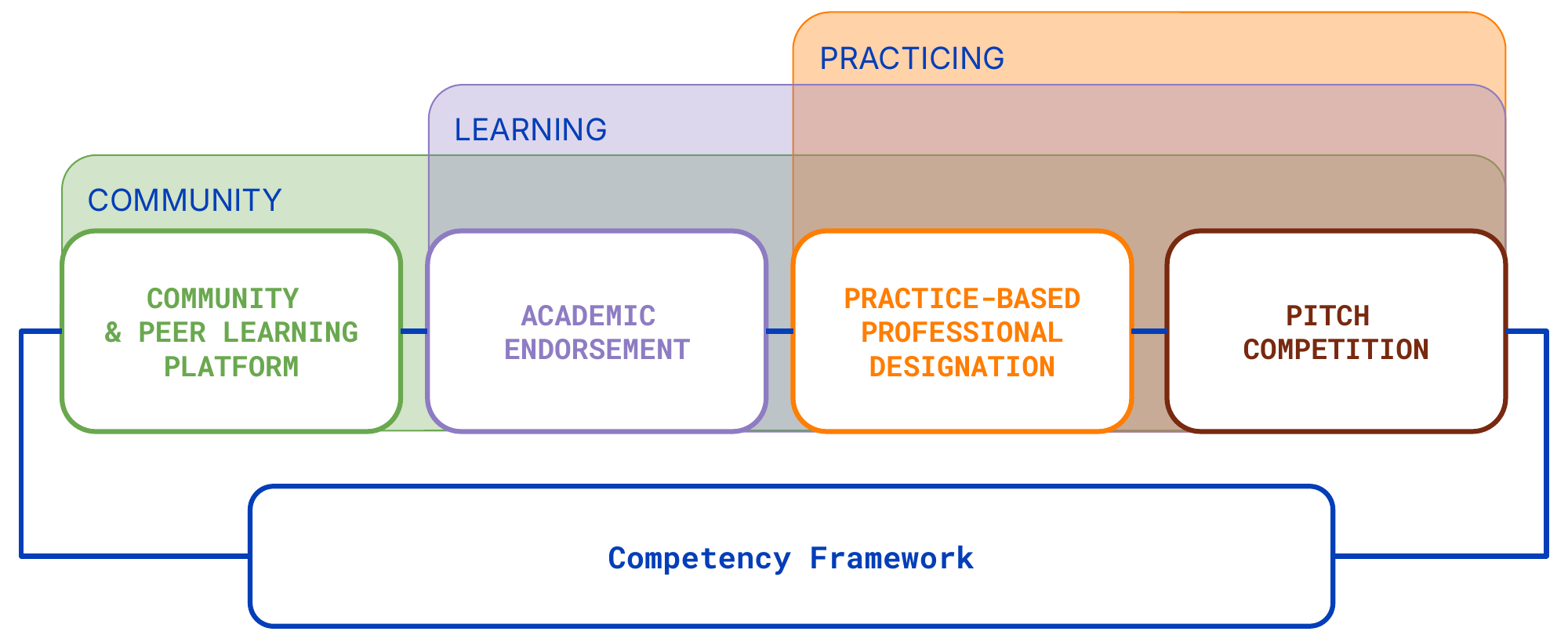
The result was not one certification but a five-part program, designed using Doblin’s Ten Types of Innovation:
- A competency framework: living, cross-sector and co-created, open to everyone
- A community and peer learning platform where practitioners build knowledge and mentor each other
- A practice-based professional designation, recognizing applied expertise across fields
- Academic endorsement for programs that align with real-world practice
- A pitch competition offering funding and visibility for emerging ideas
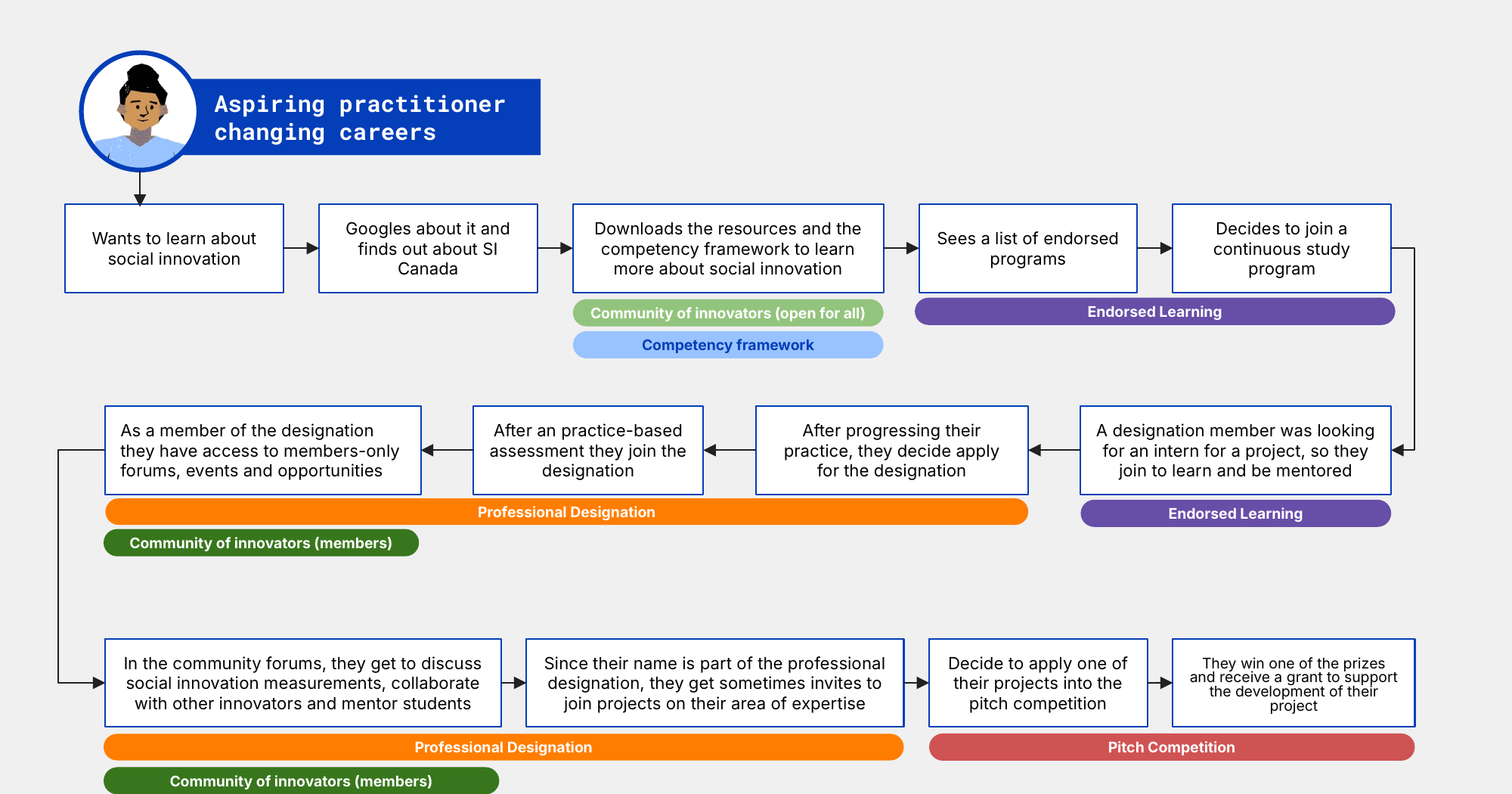
Together they form a path someone can follow from first discovering social innovation to being recognized for it. We set out the business model, sequencing to 2040, and the capabilities SI Canada would need to deliver it, and presented the strategy to SI Canada at OCAD’s final critiques.
Dania Idam, Danielle Pierre, Kaitlyn Keon, and Malu Cascelli.
OCAD University, MDes in Strategic Foresight and Innovation: Leading Innovation and Sustainable Business Design, April 2025.

