Graduate student wellbeing as a systems problem
Initial research question
How can a university better support the wellbeing of part-time students and staff, specifically in graduate programs?
The brief was framed as a request from a university’s administrators. Wellbeing had declined since the pandemic, and they wanted to find ways to improve it and to encourage more students and staff to use the university’s wellbeing offerings. We narrowed the focus to part-time graduate students, a group we belonged to.
Reframed research question
How can a university better support the wellbeing and experience of graduate students?
The reframe hinges on one word: experience. Graduate students, it turned out, mostly manage their own wellbeing well. They arrive with prior education, work experience, clear reasons for being there, and strong support from family and friends. They rarely need the university’s wellbeing services, which are designed mainly for undergraduates. What wore them down was how the program itself was designed and run: inflexible structures, unclear expectations and gaps in communication.
The brief asked how to get more people using the services. We concluded that more services would treat the symptom. The cause was the design of the program.
How we worked
Our primary research was ethics-approved: interviews with current students, alumni, and graduate students at other institutions; autoethnographies of our own first year in the program; netnography; and interviews with subject-matter experts on how the university is structured. Because we were studying a system we were inside, we tracked our own biases deliberately throughout.
On the systems side, we modelled graduate education as an open system in three nested layers: the student’s personal ecosystem; the institution and department; and academic culture and the wider socioeconomic environment. We mapped the student journey from enrolment to graduation and brought it together in a large-scale synthesis map.
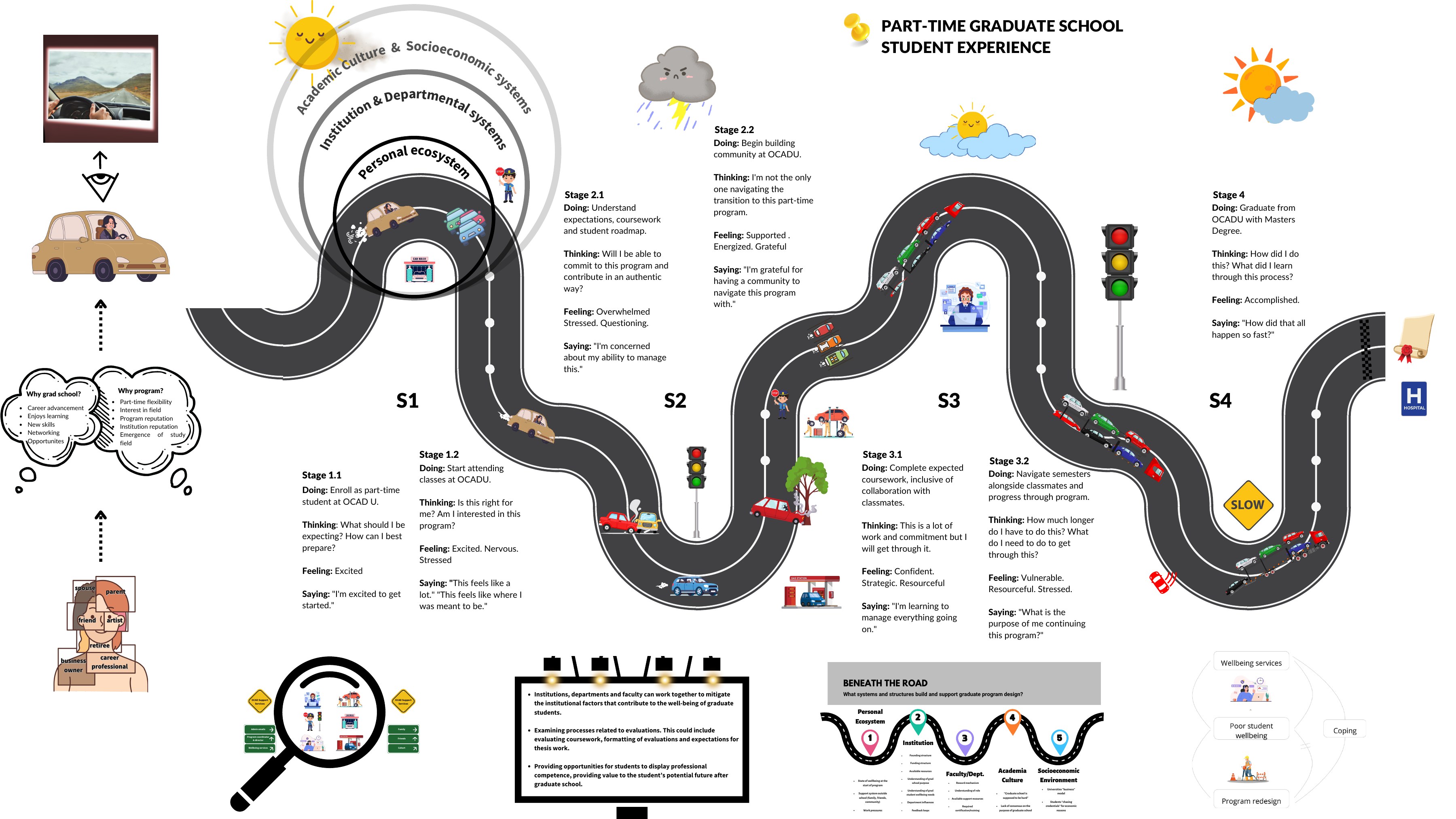
What came out of it
The pattern was a classic systems archetype, Shifting the Burden. The university responds to poor graduate wellbeing with support services. These help students cope, but they draw attention away from the fundamental cause. Our recommendation was to keep the services as short-term support while re-evaluating how graduate programs are structured and delivered.
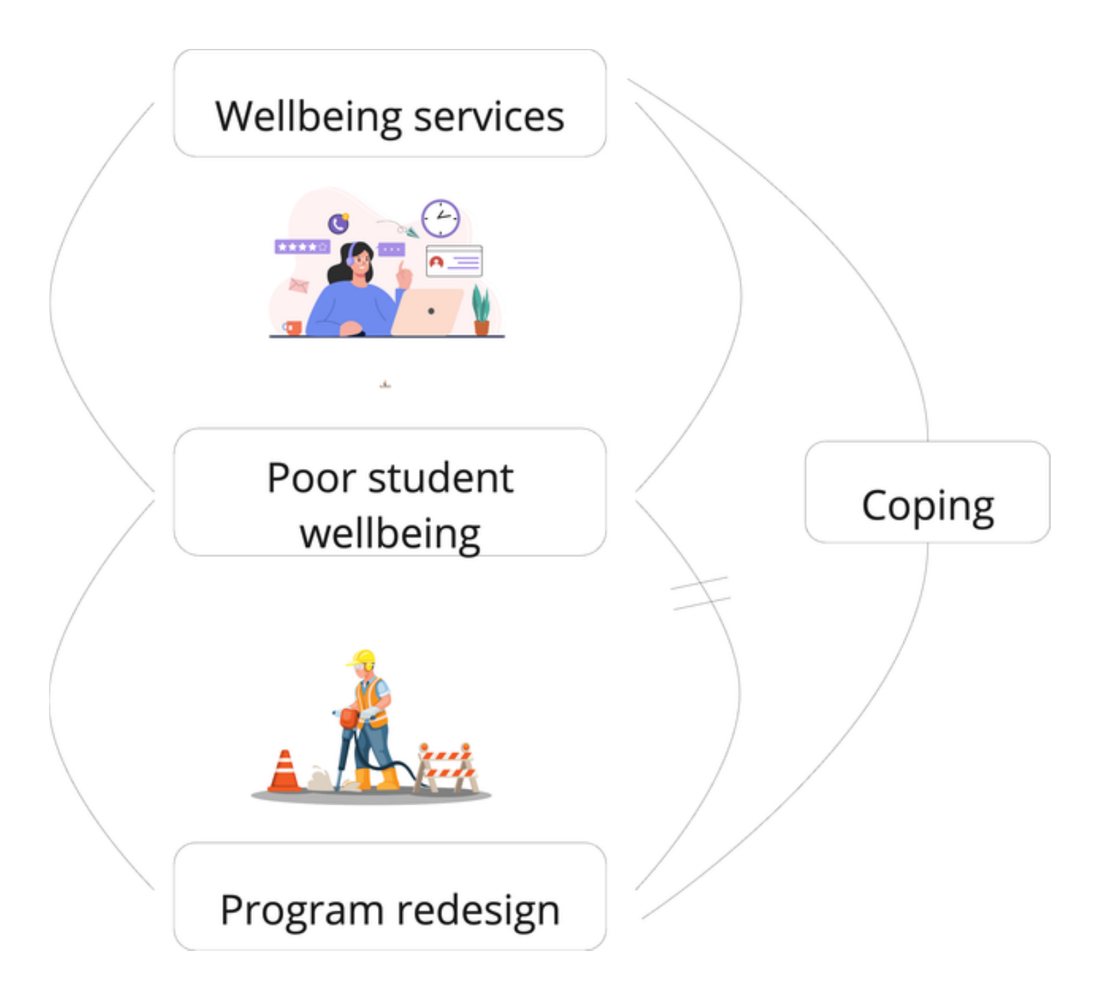
We located the intervention at one of Meadows’ leverage points, the structure of the system’s stocks and flows, and set out five areas to act on:
- how coursework, evaluations and thesis expectations are designed
- opportunities for students to demonstrate professional competence
- making sure faculty know what support exists and how each course fits the degree
- helping students translate graduate skills for non-academic employers
- deliberate ways for peers to connect within departments
These are less costly and more feasible than trying to provide individual psychological services.
Dania Idam, Kaitlyn Keon and Lise Crouch.
OCAD University, MDes in Strategic Foresight and Innovation: Innovation Research Methods and Understanding Systems, Winter 2024.

